

Interview with Sean Hogan, the designer behind the GOTYA 2026 wordmark
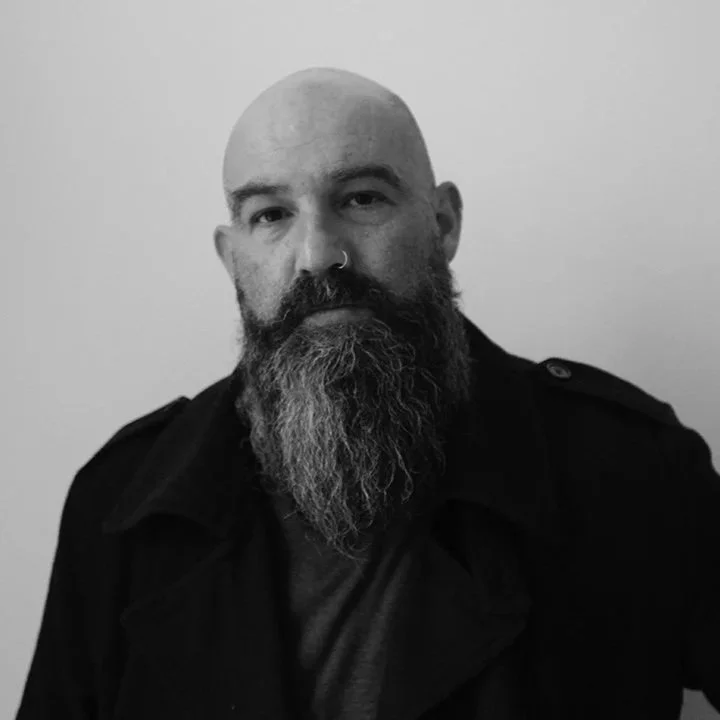
• Sean Hogan
Sean Hogan is a DIA Accredited Designer and founder of Trampoline. His wordmark for GOTYA 2026 riffs on the design elements in DIA’s historic brand identity featuring the square, circle and triangle.
Graphic designer Sean Hogan has built a solo practice as quietly fearless as any in the country. From Melbourne studio Trampoline, he has worked with the likes of Apple Music, The New York Times and Wired magazine, while never losing sight of his creative ambitions. In this special interview, he speaks with DIA CEO Simone LeAmon on the reveal of his wordmark for GOTYA 2026, reflecting on his journey from graduate to early career practice and the foundations that shaped his approach.
SL: Take us back to the beginning — what drew you to graphic design, where did you study, and when did you graduate?
SH: I was always drawing as a kid. I’d spend hours designing cars or machines, annotating them with things like ‘tomato sauce squirter’ or ‘thumb tack dispenser’.
In my early teens I started making posters for family events, drawing compositions, cutting out letters, and assembling big banners for weddings, birthdays and anniversaries. Looking back, that was probably my first foray into graphic design, even if I didn’t know it at the time.
In my final year of high school, I spoke to the careers officer about studying art and design. I’d missed the university application deadline, so he suggested the Advanced Certificate in Art and Design at TAFE. I was accepted, which gave me a year to focus on building a portfolio.
In 1992 I was accepted into Swinburne University, where I completed a Graphic Design degree, graduating in 1994.

• Sean Hogan, GOTYA 2026 Wordmark.
SL: You founded your design studio Trampoline in 1995 — that’s a bold move for a young designer. What gave you the confidence to go out on your own so early, and what did those first years of practice really look like?
SH: I started Trampoline with two friends from Swinburne, Seldon Hunt and Garth Davis. It was a time of real upheaval in the design industry, with computers and digital design still in their infancy. As young graduates, we had a fair bit of bravado and thought we could be the new face of design.
For the first time, it was possible to run a small studio without heavy investment in equipment, so we gave it a go. We were ambitious but quickly realised how hard it was to make a living without clients or connections.
We all took jobs in small studios and kept Trampoline going after hours, using it as a space to experiment without client constraints. Over time, the others moved on, and I continued running it, gradually building it into a viable studio.
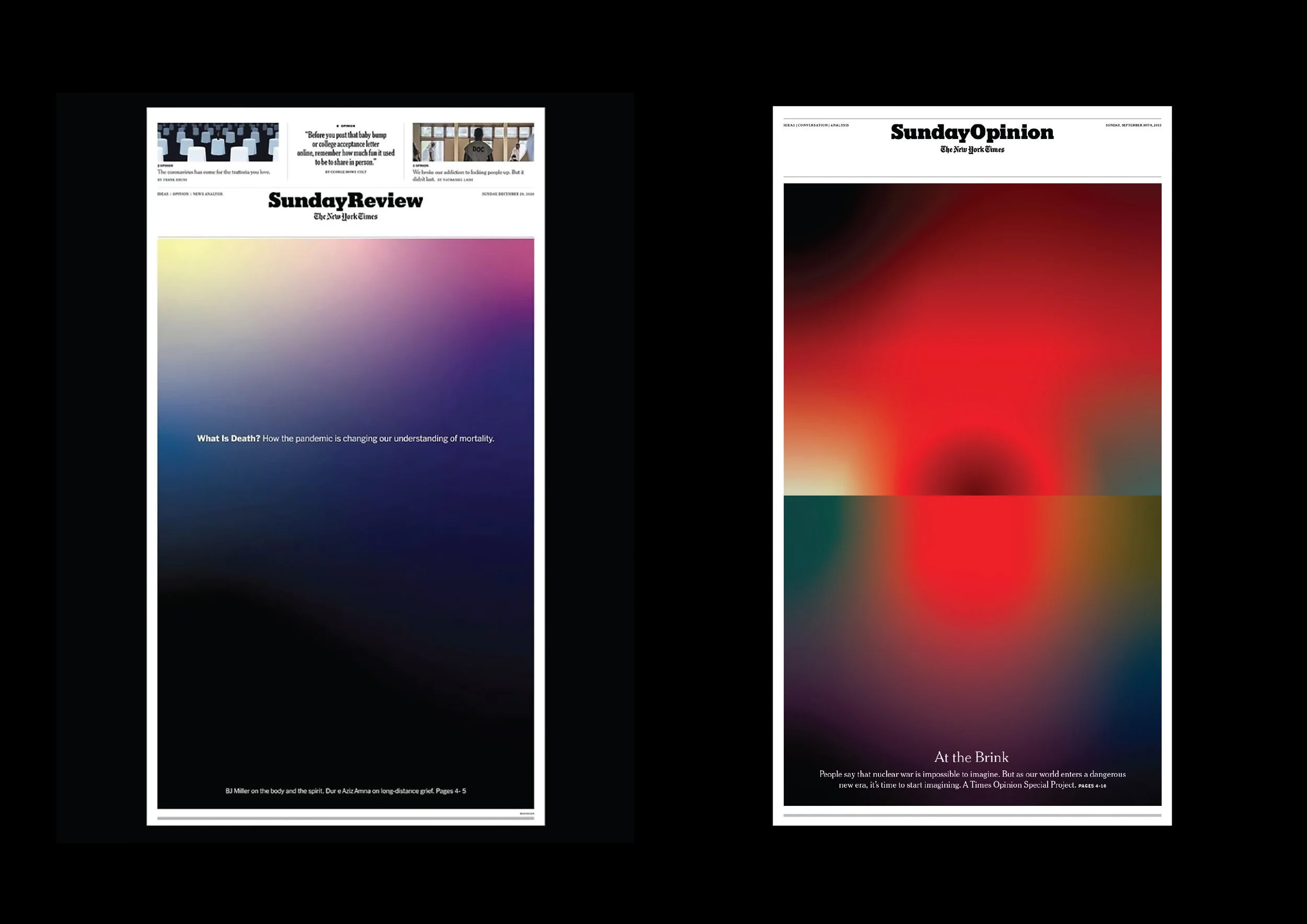
• Sean Hogan, New York Times, Sunday Review 2020 and Sunday Opinion 2024
SL: Your client list spans Apple Music, The New York Times and Wired in the US, alongside local clients including RMIT University and Taylor Cullity Lethlean Landscape Architects. Your work has also been published internationally and presented at design weeks in San Francisco and Shanghai. How did you build that breadth of reach from a Melbourne studio, and what has kept your practice grounded in Australia?
SH: That early model of Trampoline, making space for experimentation alongside commercial work, set a strong foundation. Those early experiments led to a connection with John Warwicker, co-founder of the multidisciplinary studio tomato, in 1997. I was fortunate to be invited to work with him on the Federation Square project in Melbourne, which I stayed with for the next five years. During that time, I worked with and met a wide range of people from around the world.
Later, I began sharing some of those experimental works on Instagram, which led to commissions from Apple and The New York Times. From there, one thing leads to another, your work circulates and your network grows.
As for staying grounded in Australia, it’s quite simple. Melbourne is home, where my family and friends are, and in today’s digital landscape it matters less where you’re physically based.
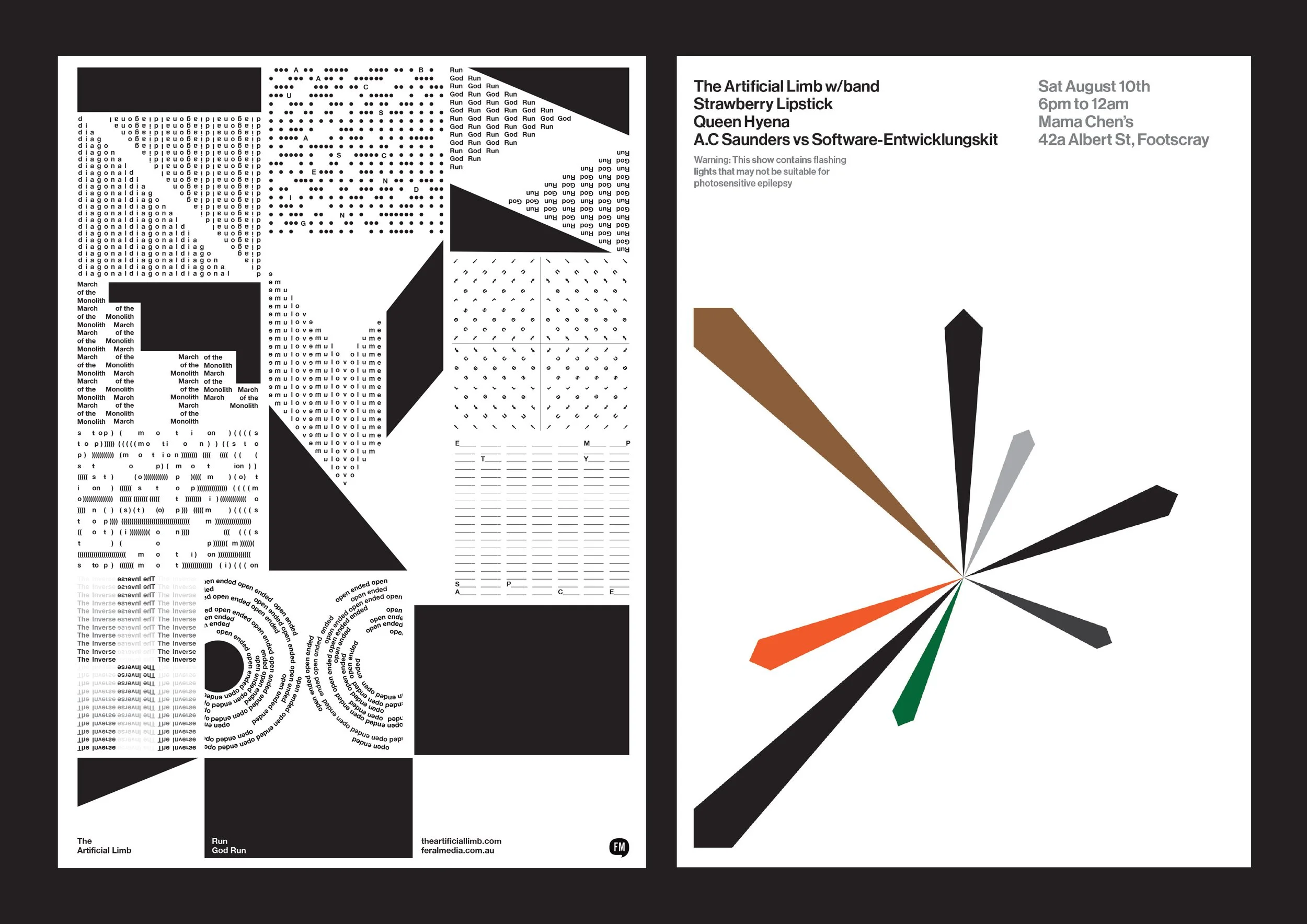
• Sean Hogan, The Artificial Limb, posters for an electronic musician, 2025
SL: Running parallel to your client work, you’ve maintained a serious creative practice in print and painting, with work exhibited and held in collections including the National Gallery of Victoria. For a graduate starting out, how do you make the case for protecting that kind of creative space, even when commercial pressures mount?
SH: Most people get into graphic design to be a creative, but the reality of practice can be quite different. Creating space to develop your own creative work is essential. That extends beyond work, to visiting galleries, watching films and reading, all of which feed your ideas and thinking.
I always made art as well as design, but it wasn’t until around 40 that I developed a conceptual framework underpinning the work. From that point I became much more focused on producing cohesive bodies of work. Sometimes ideas take time to mature.
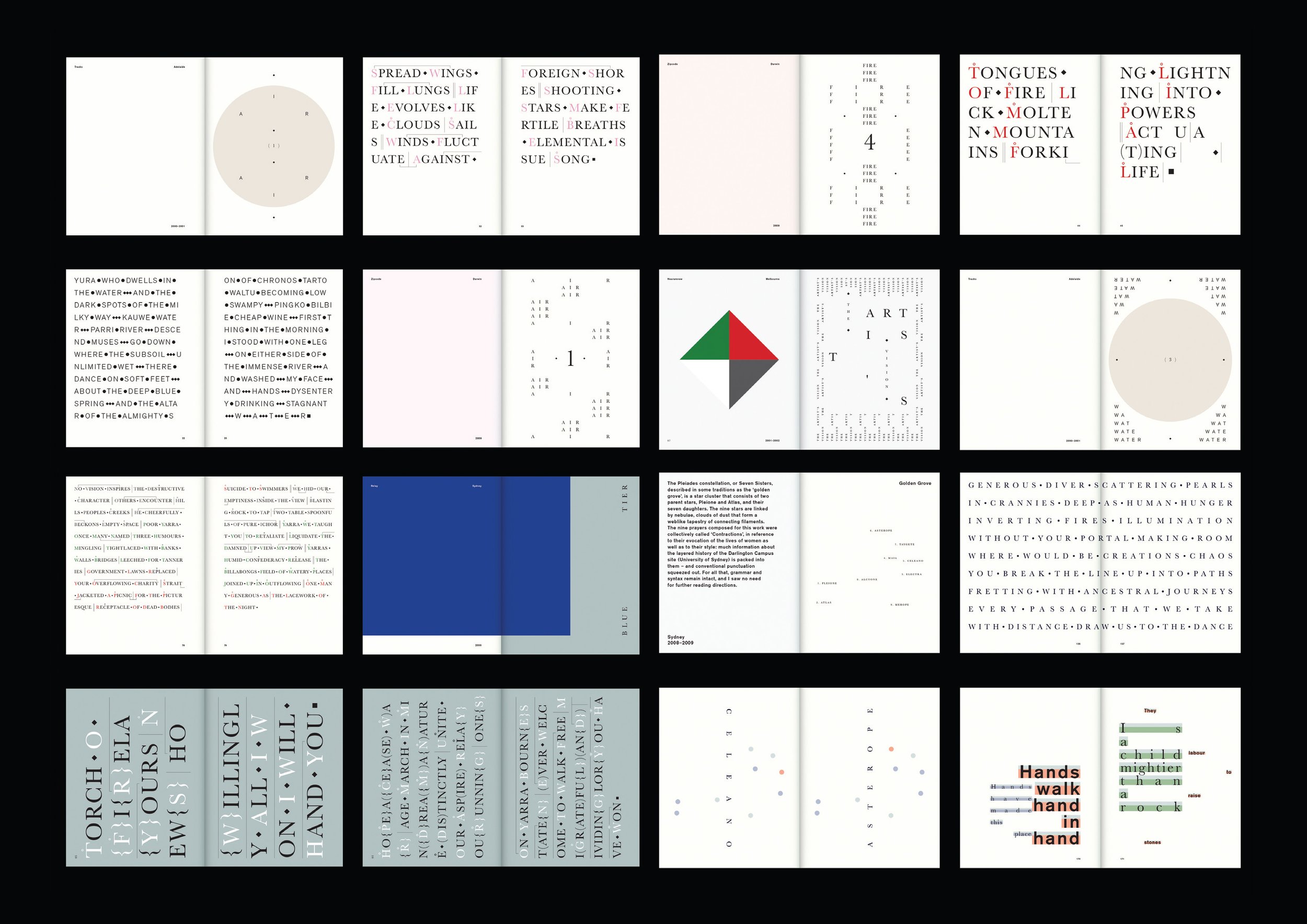
• Sean Hogan, spreads from Signature 2020, author Paul Carter, publisher Lyon House Museum, Australia, 2020, linen bound hardcover publication, 27.8 x 21.5mm.
SL: Every practice has to start somewhere. How did you land your first clients, and what was the most unexpected or unconventional way early work came through the door?
SH: It was difficult to start without connections, especially before the internet and social media. You’d spend hours walking around with a folio, knocking on doors, cold calling, trying to get a foot in. Occasionally someone would give you a chance.
One early client was actually a university lecturer who needed booklets designed. We also screen printed posters for businesses, including Greville Street Bookshop, and convinced them to sell them for us. It was a way to get work out into the world, make a bit of money and build connections.
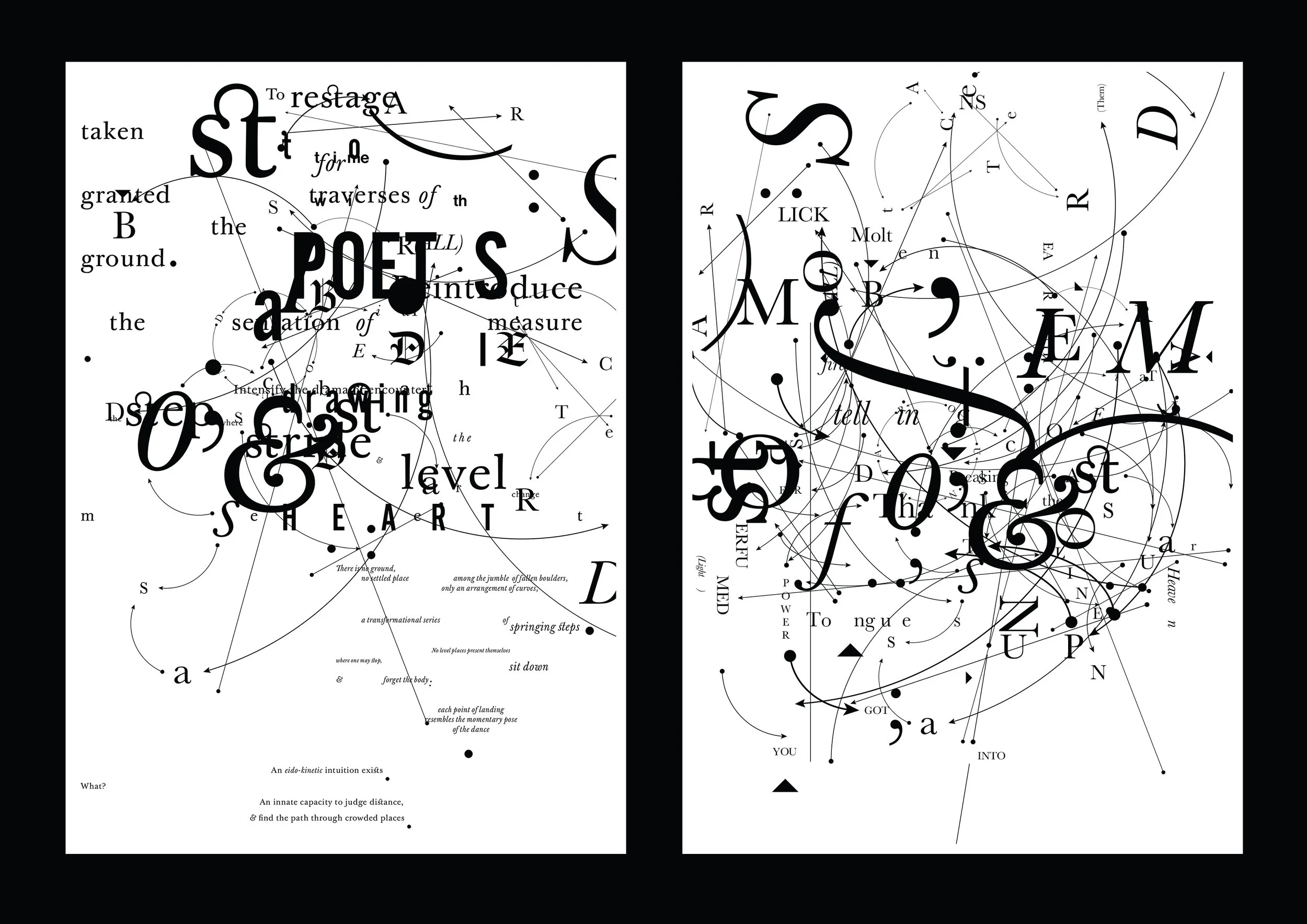
• Springing 02, a collaboration between Sean Hogan, John Warwicker and Paul Carter, 2026, archival pigment print on rag paper, 189 x 841mm.
SL: Were there mentors or figures in the industry who shaped how you thought about practice, and if so, what did they give you that formal education couldn’t?
SH: John Warwicker was a major influence. I worked closely with him for over five years, talking constantly about design, art, music and architecture. He’s a master typographer with a vast knowledge, and he guided me through books, films and artists to follow.
More importantly, I learnt by observing how he worked, how he approached meetings, developed ideas and collaborated across disciplines. His attitude to work ethic was simple: “That’s good, now do it better.” I still think about that when refining a design.
Nothing teaches you more than working on real projects. The Federation Square project was intense and felt like another degree. It had a profound impact on how I think and work as a designer and artist.
SL: You established Trampoline in 1995, a very different world to the one graduates are entering today. With tools, technology and the business of design all evolving so rapidly, what advice would you offer a graduate setting up a practice right now?
SH: Don’t give up — keep going. Work at formulating your ideas, they are everything. Learn as much as possible about everything. Even unpleasant experiences can teach you something. Learn to talk about your work and your ideas and share them. Regardless of the size of the job, always do your best. Be kind and honest.
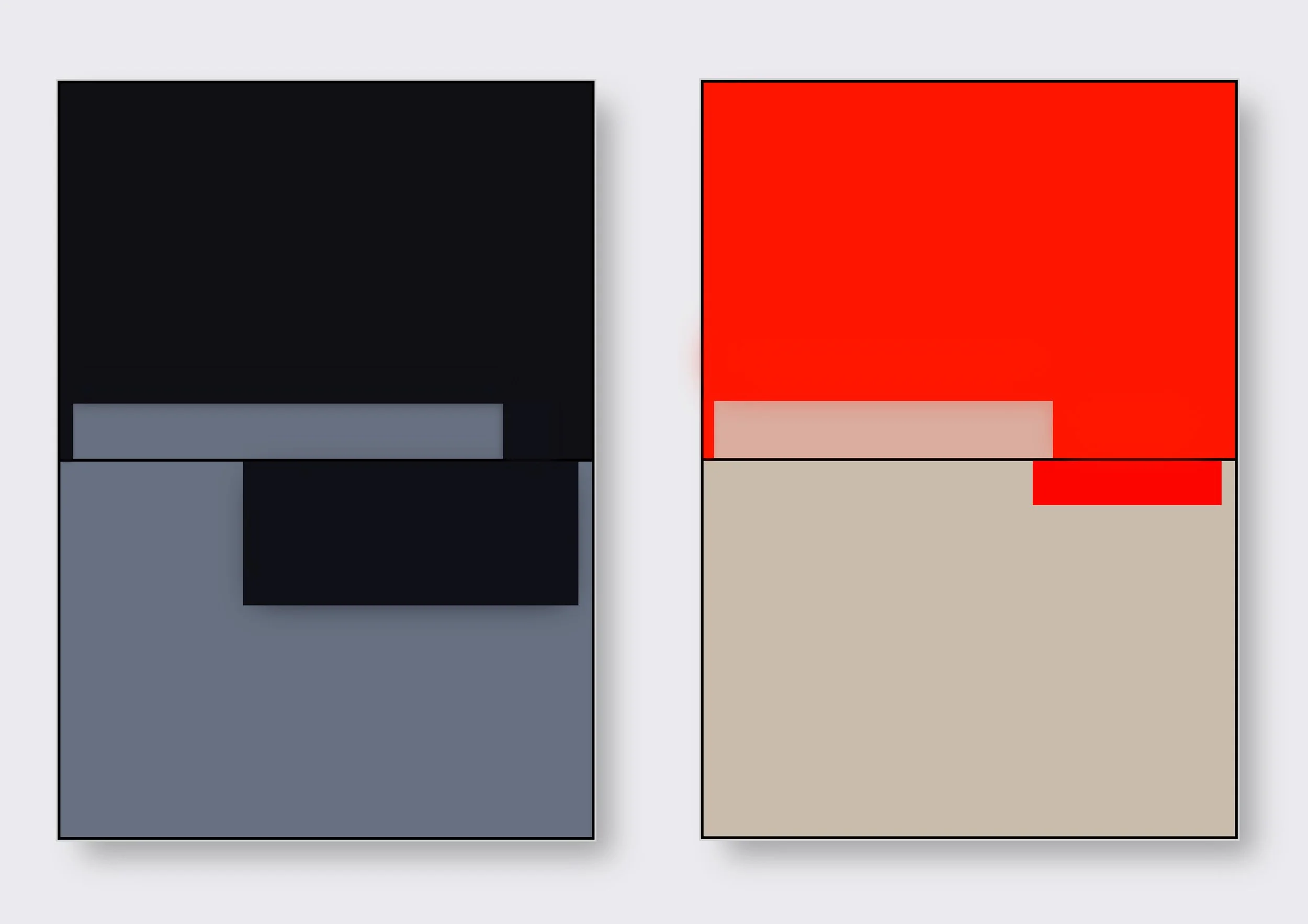
• Sean Hogan, Disconnect paintings. Distant lands in my head, 2025, and The night is between the sound, 2025, synthetic polymer aerosol on acrylic sheet, aluminium frame, 60.9 x 43.2 cm.
SL: You designed the wordmark for GOTYA 2026, an award celebrating the next generation of designers. What did that brief mean to you personally, and what would you want this year’s nominees to take from your own story?
SH: It was a real honour to design the GOTYA wordmark for the Design Institute of Australia. The DIA plays an important role in advocating for design and fostering a shared community across disciplines.
Graduation is a pivotal moment. Your career is ahead of you and while it can feel daunting, it’s also full of possibility.
I’d hope my story shows that a career can take many twists and turns, and that’s part of it. Back yourself, make space for your own voice, and trust that it’s a worthwhile pursuit.